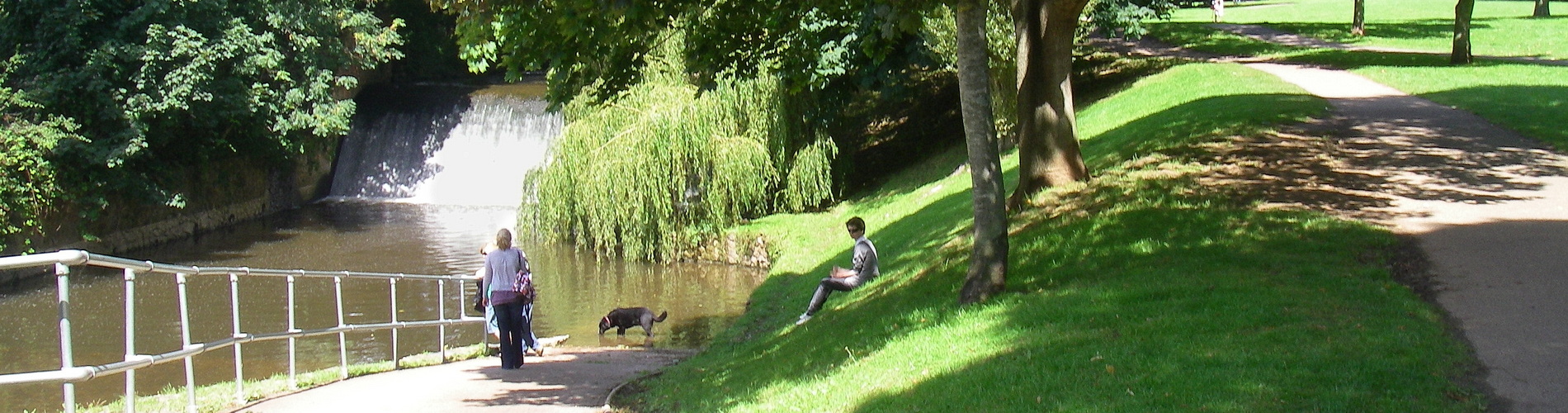
We seem to hold a special affection for otters – and these pages have already looked at otters along the River. Indeed, emotions can run high, as in this piece from 2004 demonstrated, looking at otters on the river Sid: how a habitat was destroyed.
Perhaps what makes them particularly attractive is that they are so elusive, so difficult to see – and so when they are discovered, it can be a real treat. So much so, that sightings will be reported, whether in the Herald, as in ‘a lucky week for nature spotting in Sidmouth…’ or on social media, with someone in the Byes this afternoon & a glimpse of the Otter near the Ford.
Looking through the pages of the excellent online resource Sidmouth Nature, there are several pieces and mentions devoted to the otter.
It’s midwinter, and time to look at some Winter Science where we learn that many species remain active but change their physical “settings”, including otters who grow dense, oily undercoats: an Otter’s fur is 200 times denser than human hair, making it completely waterproof.
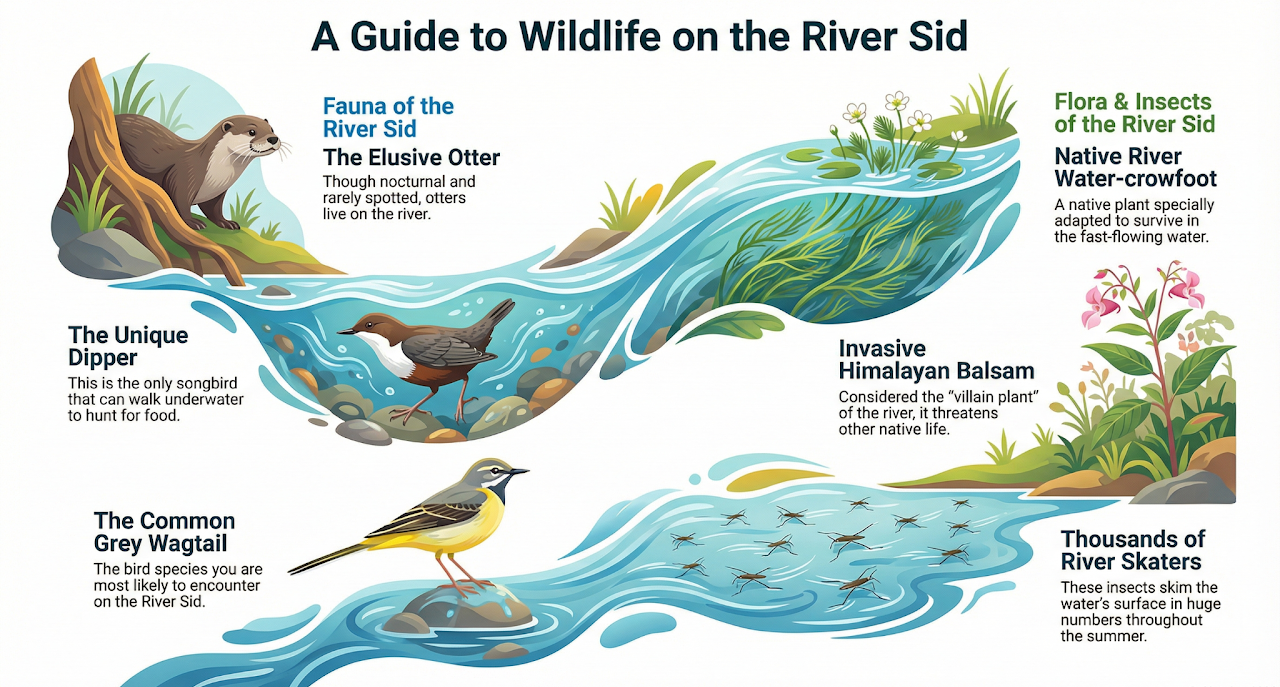
In a general guide to River Wildlife we are given both a lively and informative pictogram, and also some key points:
.
While some populations are small, the presence of these apex predators and ancient species indicates the river’s ecological importance.
-
Otters (Lutra lutra): Evidence of otters, such as tracks in the mud and spraint, is found along the river. They are nocturnal and wary, but sightings have occurred near the river mouth and within The Byes.
[And a Glossary: River Sid is provided for terms such as ‘spraint’…]
Finally, the website also takes us into specific areas in the Sid Valley – where otters can be seen, including Harcombe Lane, Fortescue and Sidford – where we are again reminded of their elusiveness: the river supports a successfully breeding population of Otters, though their shy nature means they can be deterred by high levels of human and dog activity.
Do enjoy the magic of your own sightings – and do share them!
…