How much agricultural pollution is entering the Sid?
In January 2022, Parliament’s Environmental Audit Committee warned that a ‘chemical cocktail’ of sewage, slurry and plastic polluting English rivers puts public health and nature at risk’:
“poor water quality in English rivers is a result of chronic underinvestment and multiple failures in monitoring, governance and enforcement.”
Some rivers are doing really badly – as reported in the weekend i-paper a year later on the River Wye and why the impending ‘death’ of one of the UK’s longest and best loved rivers should worry us all:
Those who monitor the Wye say largely agricultural pollution has left the river and the delicate eco-system it supports “on a precipice”.
The River Sid is actually doing much better than most rivers in England – as are its beaches.
As Cllr Chubb back in 2016 said, Sidmouth’s water quality rated as ‘excellent’:
“There are significant health benefits to being at the beach, so it is brilliant that our bathing waters are clean and safe for people to enjoy. However, it is important to remember that they are particularly susceptible to short-term pollution, caused by heavy rain and sometimes agricultural run-off into rivers and streams, so bathers should always wash their hands after swimming or paddling in the sea.”
As for the question of ‘how much agricultural pollution is entering the Sid’ – that is difficult to ascertain, but the water quality is being constantly monitored.
At last week’s Sidmouth meeting on the river’s health, called by the River Sid Catchment Group, this issue was indeed addressed:
Another significant point of concern remains the water run-off during heavy rain, which turns the river into an ‘orange torrent’. This not only affects the river habitat but also perpetually threatens to flood the town centre and diminishes farmland with the removal of essential soil, according to an overview of the habitat survey.
Solutions to these problems, involving support and expert advice for landowners, including funding resources, were also explained. With climate changes continuing to impose pressure on the river system, the meeting looked to provide support opportunities concerning these environmental upgrades.
The piece in the Herald highlights the work of the RSCG:
It connects local groups with regional and national organisations, all with the primary goal of enhancing the ecological health of the River Sid and its tributaries, including the Snod, Roncombe, Burscombe, and Lincombe Brooks. The project’s current strategy includes collaboration with regional farmers and landowners for detailed surveys that identify the river’s strong points and areas needing improvement.
And this collaboration is key, as reported late last year when the Sidmouth Arbotryum planted their 14,000th tree:
In July 2022 Sidmouth Arboretum accepted a challenge from the Town Council Environment Committee to plant 14,000 young trees, to match the population of the valley. The target was to complete the project by April 2027.
Some years before, a similar idea had been proposed by Arboretum supporter Richard Eley, but it was stalled by Covid. The main barrier to the new target was going to be where to plant the trees. The Arboretum volunteers used their contacts to find landowners who had space that was suitable. The first sites were provided by the National Trust and Donkey Sanctuary. The first thousand tree whips were paid for by grants from the East Devon AONB and the Tree Council
The project evolved and linked with the Sid Valley Biodiversity Group and River Sid Catchment Group for many of the young trees to be planted as hedgerows to act as habitat and movement corridors for wildlife and attenuation hedges to slow the flow of rain run off and so reduce flood risks.
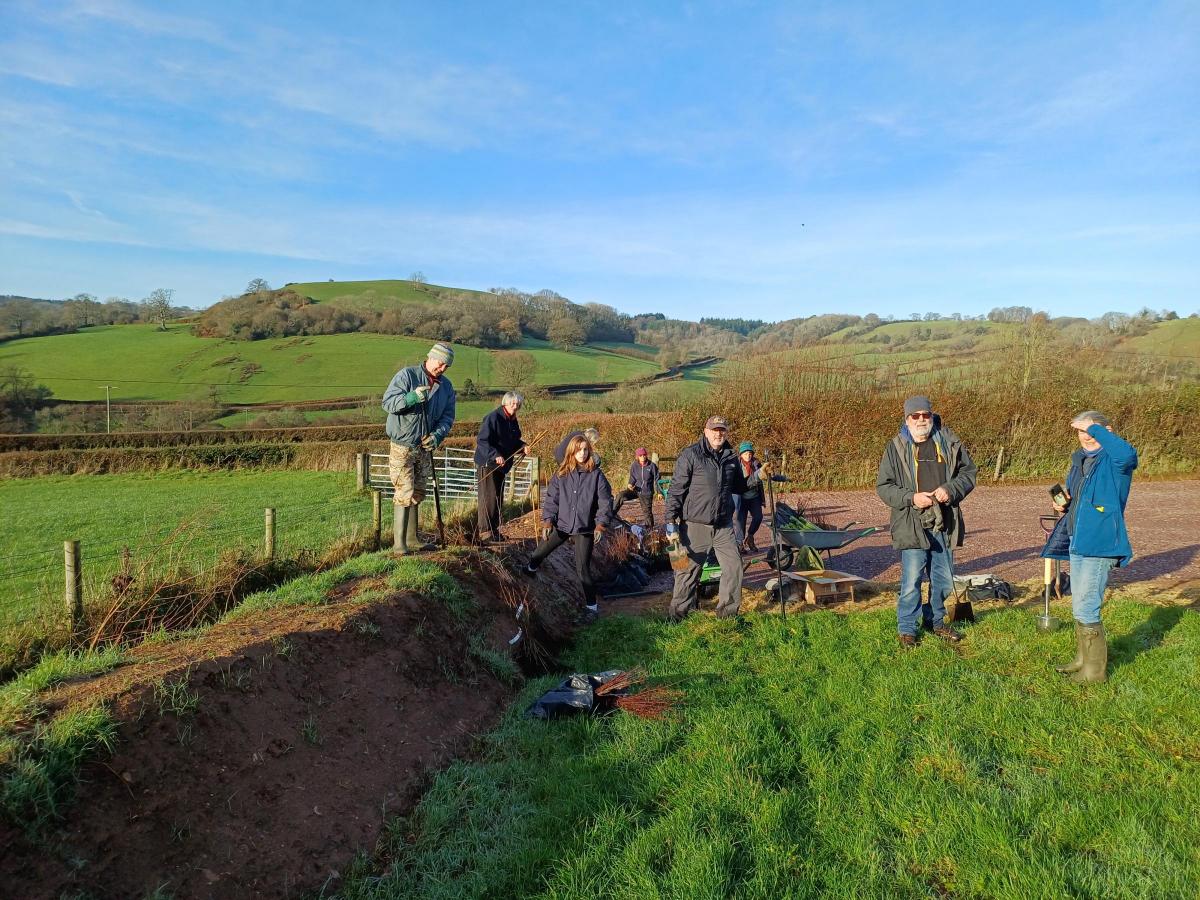
Volunteers at Cotford – Sidmouth Arboretum planting hedgerow trees to limit run-off from fields above the Sid Valley
…