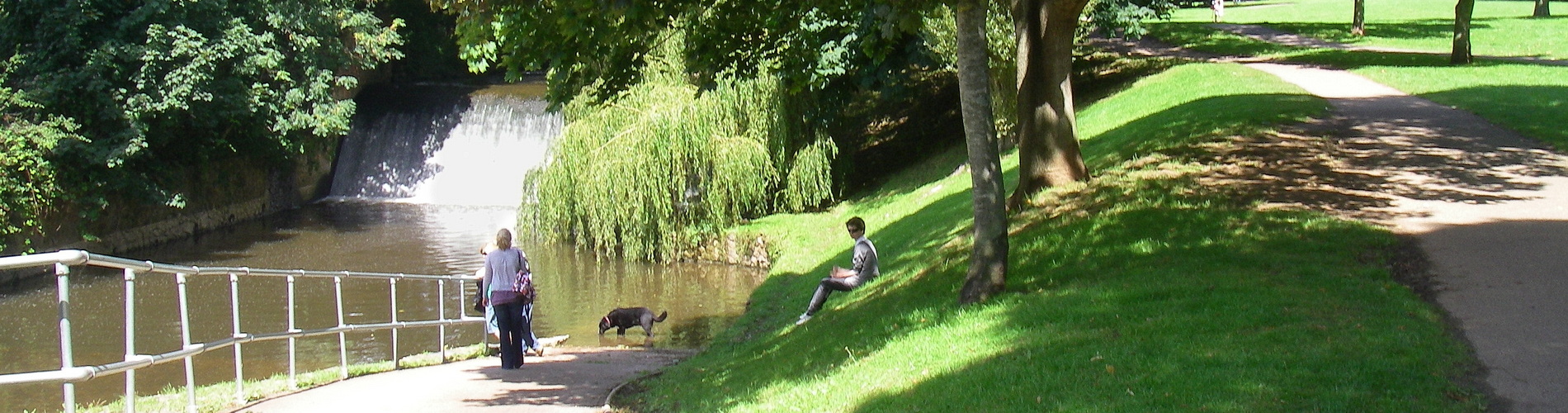
Last month, we looked at The River Sid @ the Sidmouth Nature website, which is full of information, resources, suggestions for projects and explorations and more.
Its author Peter Orchard is constantly updating and adding to it – and so we have further pages to share.
Firstly, there is a considerable Glossary on the River Sid, where “some of the more technical or unusual terms used in these texts explained”. Very useful.
Secondly and also very handy is a list of Links on the River Sid, from Local Management & Monitoring toTechnical Geography & Flooding.
Then there is a whole lot of Activities to do on the River Sid suggested: “Drawing on the principles of fluvial geomorphology, ecology, human impact, and conservation discussed in relation to the River Sid, here are ten practical outdoor activities you might undertake to further your understanding…”
And finally, at least for this overview of the latest additions, there is a Summary of the River Sid, or, rather, some fascinating “facts that define the geography, history, and ecology of the River Sid” – including:
-
Devon’s Smallest River:
The Sid is the smallest complete river system in Devon, running just over six miles (10.5 km) from its source at Crowpits Covert to its mouth at Sidmouth. -
It is a “Flashy” River:
Because of the steep hills surrounding it, the river responds incredibly quickly to rain. The water level can rise and fall dramatically in just a few hours. -
The “Red Sid” Phenomenon:
During heavy rain, the river turns a distinctive red colour. This is caused by soil and nutrients being washed into the water from the local Triassic mudstone and sandstone geology. -
A “Misfit” Stream:
The Sid is much smaller than the valley it sits in. The wide valley was likely carved by massive meltwaters during the Ice Age, leaving the tiny modern river as a “misfit” in a giant landscape. -
A Moving Mouth:
The point where the river meets the sea isn’t fixed. Historically, storms (like the great storm of 1322) and the natural movement of shingle beach have pushed the river mouth east and west over centuries.
But let’s finish with one of Peter’s excellent pictographs – also a new item on the website:
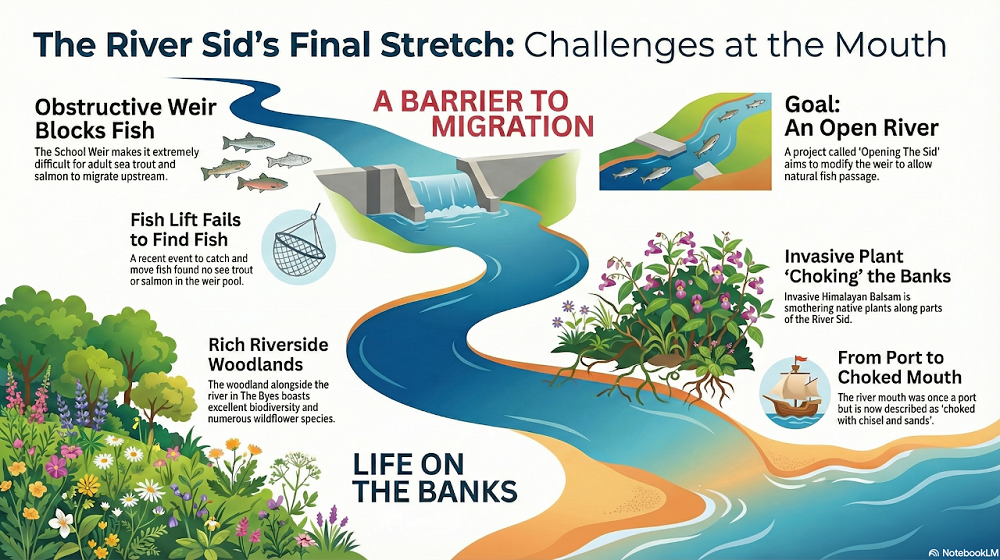
Published with permission: Sidmouth Nature – Lower Sid
…